How to deal with asynchronous code in LWC
Async in LWC
This approach results in a callback nest that is difficult to understand and debug. On the next page, you will learn how to do it properly!

You might have seen something like this before:
async retrieveData() {
    await getAccounts({ country: this.country }).then(async accounts => {
        await findPartners({ accounts: accounts }).then(partners => {
            this.partners = partners;
        });
    });
}
This approach results in a callback nest that is difficult to understand and debug. On the next page, you will learn how to do it properly!
Use async/await when you want asynchronous code to behave like a synchronous one. JavaScript will pause function execution until the promise settles:
async retrieveData() {
    try {
        const accounts = await getAccounts({ country: this.country });
        this.partners = await findPartners({ accounts: accounts });
    } catch (error) {
        console.error(error);
    }
}
If the data can be displayed later, or if you wish to perform another action only after the promise has been settled, utilize the then/catch block:
retrieveAccounts() {
    getAccounts({ country: this.country })
        .then(accounts => {
            this.accounts = accounts;
        })
        .catch(error => {
            console.error(error);
        })
        .finally( () => {
            this.hideSpinner();
        })
}
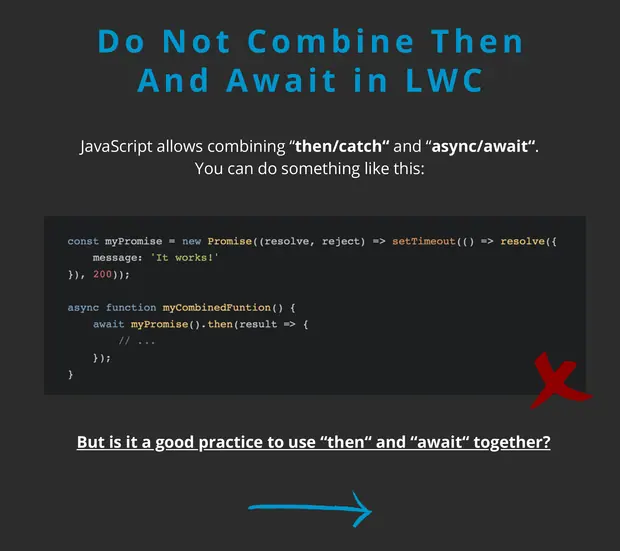
Do not combine then/catch and async/await
It creates difficult to understand code, debugging is complicated and breaks the KISS principle
async function example() {
    return await myPromise().then(result => {
        console.log(result);
    });
}async example() {
const data = await myPromise();
return data;
}Avoid nesting promises
Instead of additional then/catch blocks, try to refactor the code into smaller blocks or use async/await instead.
example(userId) {
    getAccount(userId).then(account => {
        return getPartner(account.Name).then(partner => {
            return getPartnerOrder(partner.OrderId).then(details => {
                this.partnerOrders = details;
            });
        });
    });
}async example(userId) {
const account = await getAccount(userId);
const partner = await getPartner(account.Name);
this.partnerOrders = await getPartnerOrder(partner.OrderId);
}Don’t create new promises
In most cases, there is no reason to explicit create promises. And especially, don’t wrap promises within a promise.
example() {
    return new Promise((resolve, reject) => {
        asyncMethod
            .then(result => {
                resolve(result);
            })
            .catch(error => {
                reject(error);
            });
    })
}async example() {
return await asyncMethod();
}example() {
return asyncMethod().then(result => {
console.log(result);
});
}